Introduction
As winter approaches and frost warnings become more frequent, it’s essential to think about ways to safeguard your garden. Using appropriate plant covers is a practical method to protect tender trees and shrubs from harsh cold conditions. These protective coverings not only help extend the growing season for your plants but also shield them from pests and fluctuating temperatures. In this article, we will explore seven types of plant covers that can effectively combat winter's chill.
1. Row Covers
Row covers are a versatile solution for shielding your plants from frost. Available in two primary materials—fleece and plastic—these covers provide different levels of protection. Fleece row covers are breathable and offer insulation, making them ideal for frost-sensitive plants. On the other hand, plastic row covers create a greenhouse effect, significantly raising temperatures beneath them, which is especially beneficial in extremely cold climates.
Gardening enthusiasts can utilize both types of row covers to lengthen their growing season. Always ensure that the covers are securely fastened using stakes or rocks, as both materials can be prone to wind displacement. Row covers also serve as a barrier against pests, making them an excellent all-around choice for gardeners.
- Best For: Protecting edible crops and extending the gardening season.
- Recommendation: Look for a floating row cover that is available in various sizes, providing excellent protection against wind and unexpected frost.
2. Tree Wraps
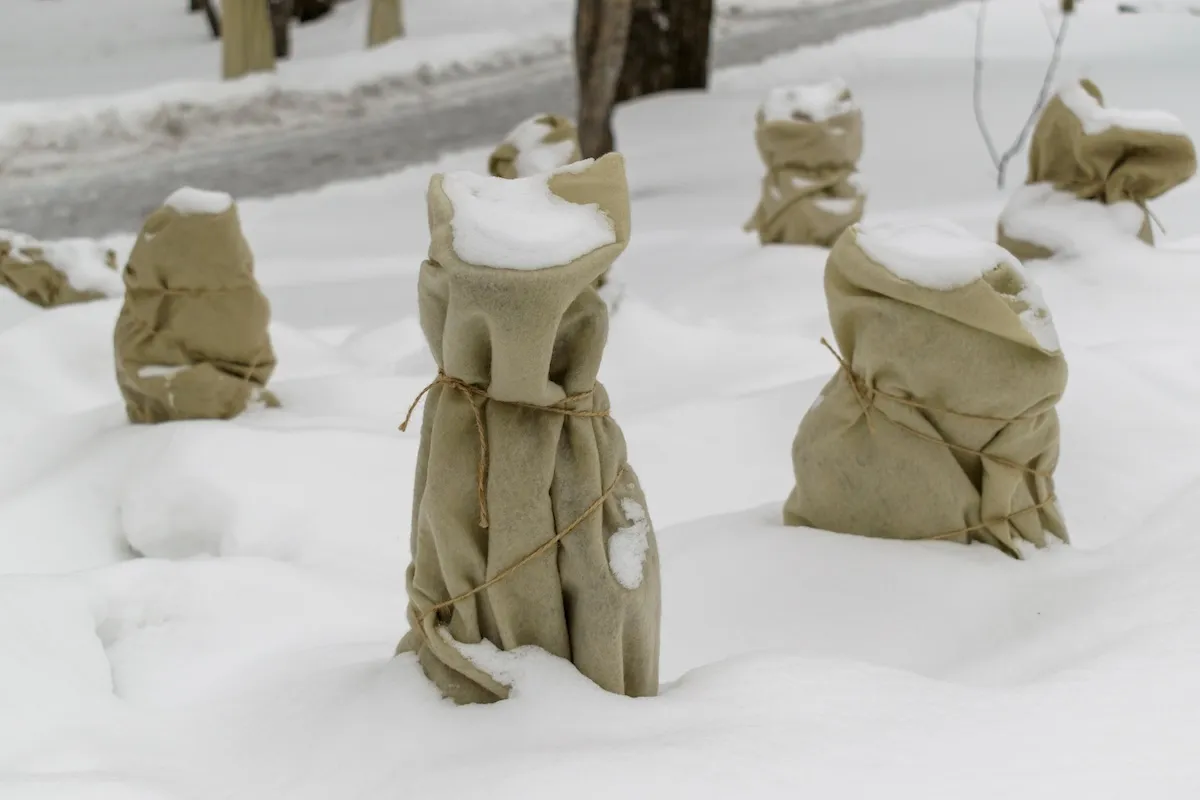
Tree wraps are essential for protecting young and thin-barked trees during winter. These wraps, made from materials such as fabric or burlap, encircle the trunks, providing insulation and preventing damage from freezing and thawing cycles. This is particularly vital for young trees, which are more susceptible to harsh weather conditions.
Gardeners typically apply tree wraps at the end of the growing season and remove them in spring. Some may prefer to keep them on year-round for continued protection against pests and environmental stressors. Properly wrapping your trees can significantly enhance their survival rate through the winter months.
- Best For: Protecting young trees and those with thin bark.
- Recommendation: Natural burlap tree wraps are a reusable option that can be easily secured with rope.
3. Burlap Covers
Burlap is a cost-effective and biodegradable option for winter protection. Wrapping shrubs and small trees in burlap can shield them from cold winds and prevent winter burn. This condition occurs when evergreens lose moisture faster than they can absorb it, leading to browning foliage.
It's best to create a tent-like structure with burlap to ensure it doesn't touch the plants directly, which could lead to freezing moisture damaging the foliage. This breathable material allows air circulation while providing an effective barrier against harsh winter elements.
- Best For: Protecting small trees and shrubs from winter burn.
- Recommendation: A wide roll of burlap can cover several plants, providing ample protection.
4. Mulch
Mulch is a gardener's best friend, serving multiple purposes throughout the year. In colder weather, it acts as an insulator for plant roots, maintaining soil warmth and moisture levels. Organic mulches, such as wood chips and straw, can improve soil quality over time as they decompose.
When applying mulch, it's crucial not to suffocate your plants. A layer no thicker than four inches is recommended, allowing sufficient air and moisture flow. Various materials can be used for mulch, making it a versatile option for plant protection.
- Best For: Perennials that require minimal protection from cold.
- Recommendation: Consider organic mulch options that are nontoxic and effective.
5. Cloches
Cloches are a great temporary solution for protecting delicate plants from unexpected frost. These small, dome-shaped covers can be placed over individual plants, providing a mini-greenhouse effect. They are particularly useful in spring when late frosts can threaten new growth.
While cloches are perfect for a handful of plants, their cost can be a drawback if you have a larger garden. Nonetheless, they offer excellent protection for tender plants that need a little extra care during unpredictable weather.
- Best For: Protecting a few tender plants in smaller garden spaces.
- Recommendation: Look for vented cloches to allow for air circulation while protecting from frost.
6. Cold Frames
Cold frames are robust structures that allow gardeners to extend their growing season even in winter. Typically constructed from wood and glass, they provide a controlled environment for plants, allowing sunlight while protecting from cold winds. Cold frames are ideal for growing greens and other vegetables in the winter months.
To maximize their effectiveness, ensure plants are nearly mature when placed inside the cold frame, as growth will slow significantly in colder temperatures. These structures can often be built as DIY projects for customization and cost-effectiveness.
- Best For: Winter vegetable gardening in cold climates.
- Recommendation: Consider building your own cold frame to fit your specific gardening needs.
7. Pop-Up Greenhouses
Pop-up greenhouses are portable structures that mimic the conditions of a greenhouse, making them ideal for starting seeds or protecting plants during colder months. They are lightweight and easy to set up, although they are more susceptible to severe weather conditions.
These greenhouses are best suited for milder climates where wind and snow are less of a concern. When placed in sheltered areas, pop-up greenhouses can create an effective environment for nurturing plants in spring.
- Best For: Mild climates and seed starting in spring.
- Recommendation: Look for models with sturdy frames and ample shelving for efficient use of space.
Conclusion
Protecting your tender trees and shrubs from the cold is crucial for maintaining a healthy garden throughout winter. By utilizing various plant covers such as row covers, tree wraps, burlap, mulch, cloches, cold frames, and pop-up greenhouses, you can ensure that your plants survive the harsh conditions of winter. Each option has its unique benefits, so consider your specific gardening needs and climate when selecting the best protective measures for your plants.